Suffering has a way of stripping life down to what matters most. Illness can bring fear, weakness, loneliness, and many questions that do not have easy answers. In those moments, the Church does not step back. She comes near with prayer, presence, and one of the most tender sacraments Christ gave to His people: the Anointing of the Sick.
This sacrament is not only for the final hours of life, though it is certainly a source of peace when death is near. It is given to those facing serious illness, the burdens of old age, major surgery, or a condition that places them in real spiritual or physical danger. Through this sacrament, Christ strengthens the sick person with grace, unites suffering to His own Passion, forgives sins when needed, and brings comfort to both soul and body.
Illness and the Human Experience
Sickness touches every human life. It reminds us that we are fragile and dependent, even when we would rather feel strong and self-sufficient. At times, illness can lead a person toward anger, discouragement, or despair. At other times, it opens the heart to deeper trust, prayer, and surrender.
The Christian faith does not pretend pain is easy. It does not call suffering good in itself. But it does proclaim that Christ fully entered human suffering. He did not remain distant from pain, tears, wounds, or death. In Jesus, God drew near to the sick, healed the afflicted, and showed that suffering can become a place of grace when united with Him.
Christ the Physician of Soul and Body
The Gospels are filled with moments where Jesus meets the sick with compassion. He touches lepers, restores sight to the blind, strengthens the paralyzed, and comforts the brokenhearted. His healing miracles are signs of something even deeper: He came to save the whole person.
This is why the ministry of healing continues in the life of the Church. The Anointing of the Sick is not merely a comforting ritual. It is a true sacrament instituted by Christ and entrusted to the Church. In it, the Lord acts through the priest to bring spiritual strength and, when it serves His will, even physical recovery.
What the Sacrament Gives
The grace of Anointing is rich and deeply personal. It brings peace and courage to endure the difficulties of illness. It helps the sick person resist anxiety and discouragement. It strengthens faith when weakness makes prayer difficult.
The sacrament also unites the person more closely to the suffering of Christ. This does not remove all pain, but it gives suffering a new meaning. What feels useless or unbearable can become an offering joined to the Lord’s own sacrifice.
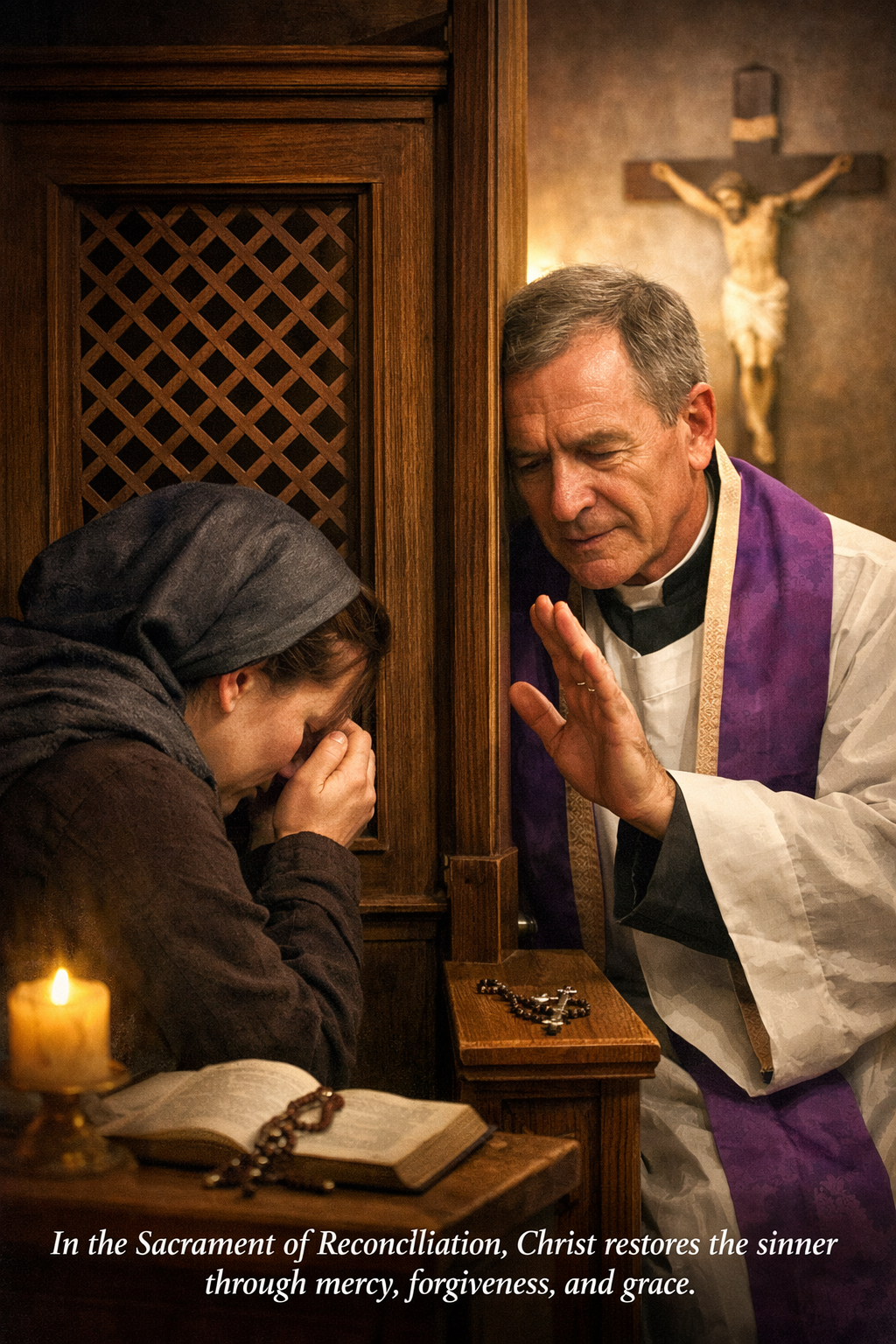
When a sick person is unable to receive Reconciliation and is sorry for sin, this sacrament also brings forgiveness. And when someone is nearing the end of earthly life, it prepares the soul for the final journey home to God.
Who Should Receive It?
One of the biggest misunderstandings is that Anointing of the Sick is only for the moment just before death. Because of that, many wait too long.
The sacrament should be received when a person begins to be in danger due to serious illness or the frailty of advanced age. Someone preparing for a serious operation may also receive it. A person whose condition worsens may receive it again. It is a sacrament meant for the seriously ill, not only for the dying.
That matters pastorally. People should not be afraid to call for a priest. The Church wants the sick to receive grace early, not only at the last possible moment.
How the Sacrament Is Celebrated
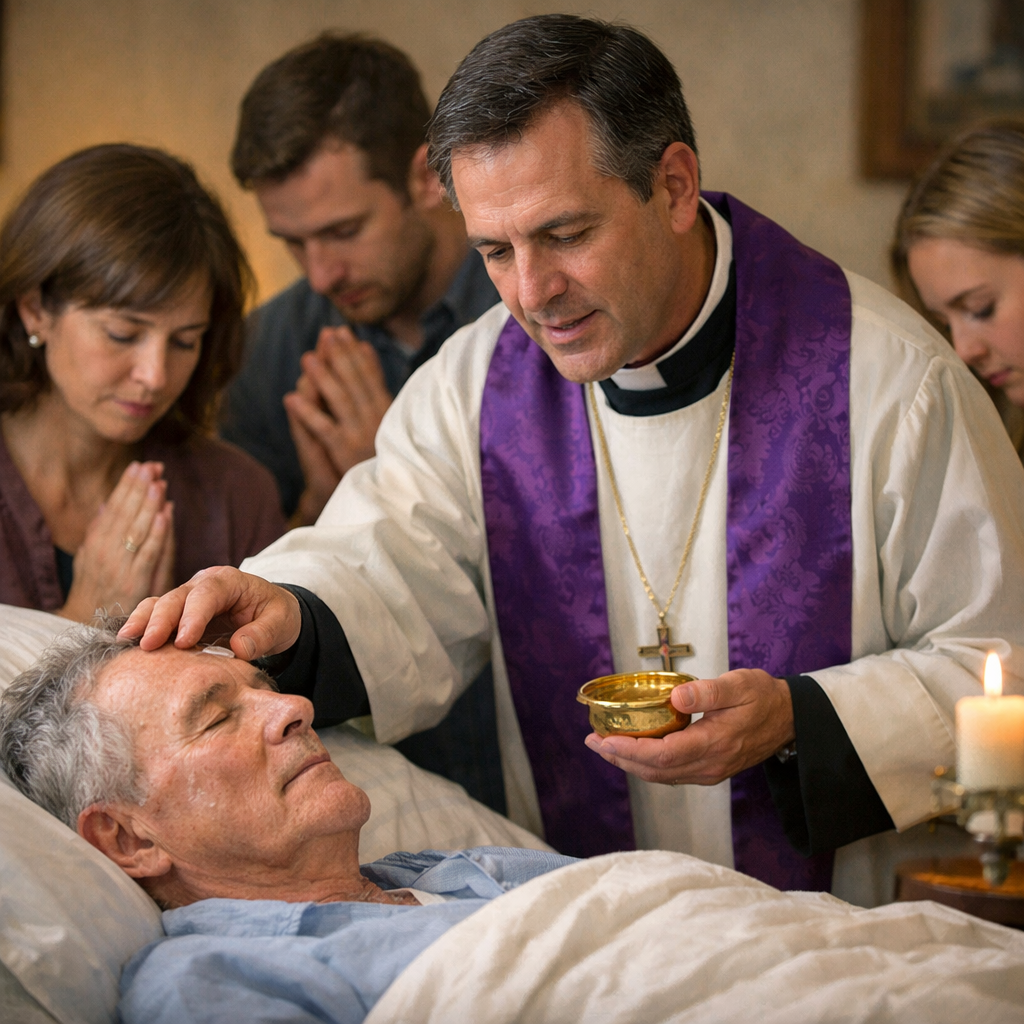
The essential signs are simple and beautiful. The priest lays hands on the sick person, prays over them, and anoints them with blessed oil. These outward signs point to an inward gift: the healing and strengthening grace of the Holy Spirit.
Often the sacrament is celebrated with Scripture, prayers of the community, and, when possible, the Sacrament of Reconciliation and Holy Communion. In this way, the sick person is surrounded by the full care of the Church.
Even in a hospital room or quiet home, the sacrament is never a private act in the narrow sense. The whole Church is present spiritually, praying with and for the one who suffers.
Viaticum: Food for the Journey
When a person is approaching death, the Eucharist received at that moment is called Viaticum, which means provision for the journey. This is the last sacrament of the Christian life, the final strengthening with Christ’s Body and Blood before entering eternity.
There is something deeply moving about this. At the end of life, the Church does not offer empty words. She offers Christ Himself. The One who walked with the believer through life becomes the food for the final passage into the Father’s house.
Strength in Suffering
The Anointing of the Sick reveals something beautiful about the heart of God: weakness is not wasted in His hands. The sick are not forgotten. They are not spiritually sidelined. They are met by Christ in a profound and sacramental way.
For families, this sacrament is also a gift. It reminds loved ones that they do not carry the burden alone. The Church walks with them. Grace is present in the room. Christ is present in the suffering.
In a culture that often fears illness, hides weakness, or avoids death, this sacrament proclaims another message. The Lord remains close. He strengthens the weary. He gives peace to the troubled. He stays faithful to His people, even in the valley of suffering.
Final Reflection
The Anointing of the Sick is a sacrament of hope. It does not promise an escape from every trial, but it does promise the presence of Christ in the midst of it. Whether healing comes in body, soul, or in the final preparation for eternal life, the Lord meets His people with mercy.
When suffering comes, the Church does not simply say, “Be strong.” She brings the grace of Jesus. And in that grace, the sick are never alone.
References
Catholic Church. (1994). Catechism of the Catholic Church (2nd ed.). Libreria Editrice Vaticana.
United States Conference of Catholic Bishops. (n.d.). Catechism of the Catholic Church.