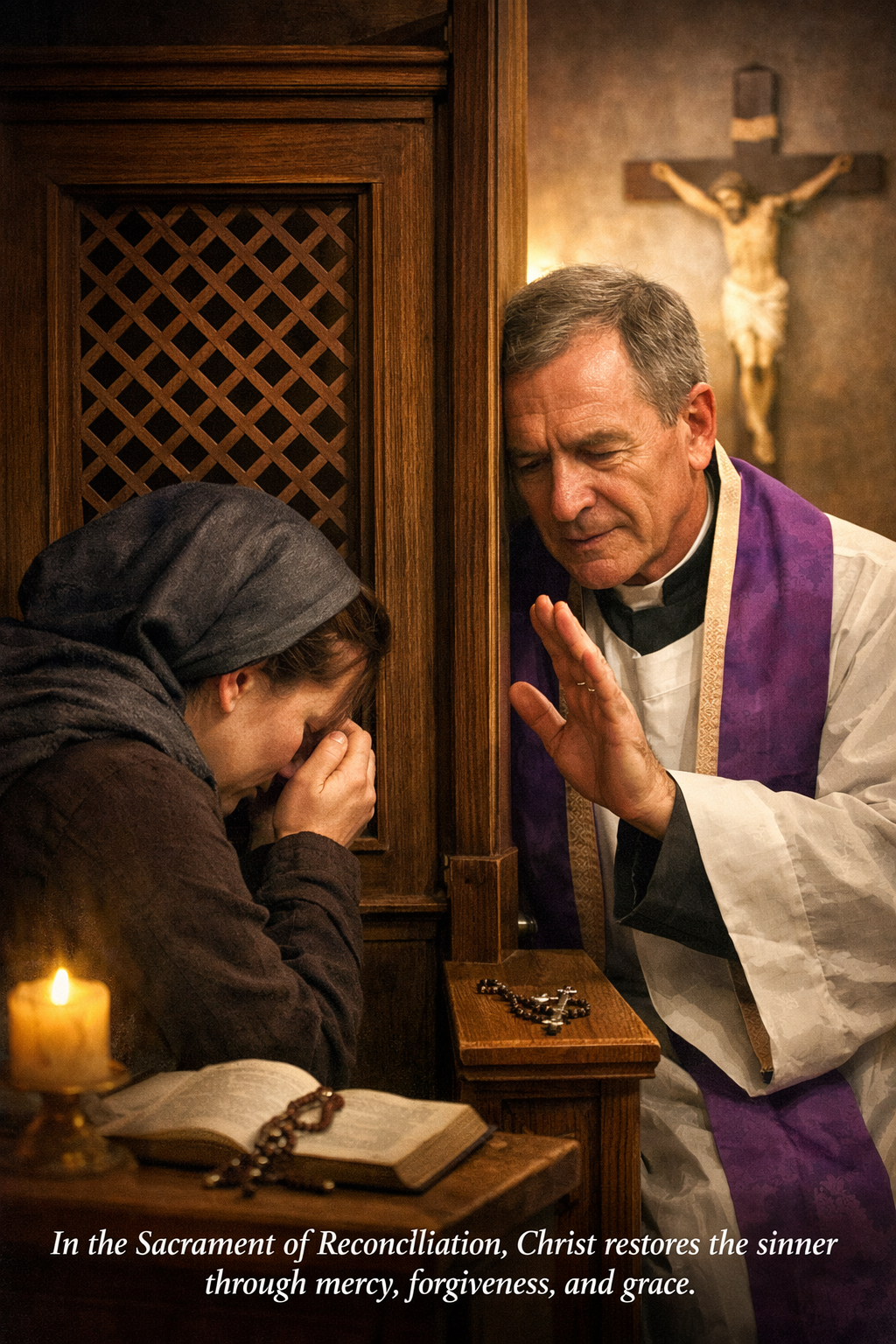
There are moments in life when sin feels heavy. We know we have failed. We may try to excuse it, ignore it, or carry it in silence, but the heart still longs for peace. The good news of the Gospel is that God does not leave us trapped in guilt. He comes to meet us with mercy. In the Sacrament of Reconciliation, the Lord does not simply point out what is broken. He restores what sin has damaged.
What Is the Sacrament of Reconciliation?
This sacrament is known by several names, each revealing something beautiful about its purpose. It is called the sacrament of conversion because it calls us back to God. It is called confession because we honestly name our sins. It is called forgiveness because God pours out his mercy. It is called reconciliation because it restores our relationship with God and with the Church.
Sin is never just a private matter. Even when hidden from others, it weakens our friendship with God and harms the unity we share as members of the Body of Christ. Reconciliation is therefore much more than a personal moment of relief. It is a true return. It is the grace of coming home. The one who confesses with sincerity is not merely excused, but welcomed again into communion.
Why We Need Reconciliation After Baptism
Jesus instituted this sacrament for his Church because he knew that, even after Baptism, his people would still struggle and fall. In his mercy, he did not leave us without a remedy. Reconciliation is a gift for the baptized who need healing, renewal, and the grace to begin again. It is not a sign that someone has failed beyond hope. It is a sign that Christ still seeks, forgives, and restores his people.
The Path Back: Contrition, Confession, and Penance
Mercy never ignores truth. It invites us to face it with humility. That is why the sacrament calls for contrition, confession, and satisfaction. Contrition is heartfelt sorrow for sin and a sincere desire to turn away from it. Confession is the honest naming of sins before God through the ministry of the priest. Satisfaction, often called penance, is the beginning of repair. It does not earn forgiveness, but expresses the desire to live differently because grace has touched the heart.
Facing Fear and Trusting Mercy
Many people feel nervous about going to confession. Some fear embarrassment. Others worry that too much time has passed. Some wonder whether their sins are too serious, while others think their sins are too small to mention. Yet the power of this sacrament does not rest on our comfort or confidence. It rests on the mercy of Christ. He is the one who acts. Through the words of absolution, he speaks forgiveness and peace to the soul that turns back to him.
The Grace of Being Restored
One of the great gifts of Reconciliation is that it offers more than pardon. It brings peace to the conscience, spiritual strength for the journey, and renewed life in grace. The soul is not only cleansed but strengthened. What was wounded begins to heal. What was distant is brought near again. This is why the sacrament is such a vital part of Christian life. We do not grow in holiness by pretending we are without sin. We grow by allowing Christ to heal us where we are weakest.
Reconciliation teaches us to live in humility, honesty, and hope. It reminds us that no sin is greater than the mercy of God when the heart truly turns back to him. It reminds us that failure is not the end of the story. Grace still has the power to renew what seems lost.
An Invitation to Return
If you have been away from confession for a long time, this sacrament is still for you. If your heart feels burdened, this sacrament is still for you. If you know you need mercy and healing, this sacrament is still for you. Christ continues to welcome sinners with compassion. He continues to restore what has been broken.
In Reconciliation, truth and mercy meet. We kneel in honesty before God, and we rise forgiven, strengthened, and restored.
Catechism References
- CCC 1422–1424
- CCC 1440
- CCC 1446
- CCC 1450–1460
- CCC 1468–1469
- CCC 1485–1498
Reference
Catechism of the Catholic Church. (1997). 2nd ed. Libreria Editrice Vaticana.