The Church does not speak about Holy Orders as a path to status or privilege. It speaks of it as a sacrament of service. Through Holy Orders, Christ continues to shepherd His people, preach the Gospel, celebrate the sacraments, and strengthen the Church through men set apart for sacred ministry. This vocation is not about personal advancement. It is about being given over to the work of Christ for the good of His people.
At the center of Holy Orders is the truth that Jesus Himself is the one High Priest. Every ordained ministry in the Church exists because it shares in His mission. Bishops, priests, and deacons do not replace Christ. They serve in His name and point the Church back to Him. Holy Orders is therefore not simply a human appointment or an ecclesial job. It is a sacrament through which Christ acts for His Body.
Why It Is Called “Orders”
The word orders has deep roots in the life of the Church. In ancient society, an “order” referred to a body or group set apart for a particular role. In the Church, this word came to describe those consecrated for sacred ministry. Holy Orders is the sacrament by which a man is ordained for service in the name of Christ and His Church.
Ordination is more than public recognition of a person’s gifts. It is a sacred act in which the Holy Spirit confers a grace and spiritual character proper to the office being received. The sacrament marks a man in a lasting way for service to God’s people. This is why ordination is not repeated. Like Baptism and Confirmation, it leaves a permanent sacramental character.
The Three Degrees of Holy Orders
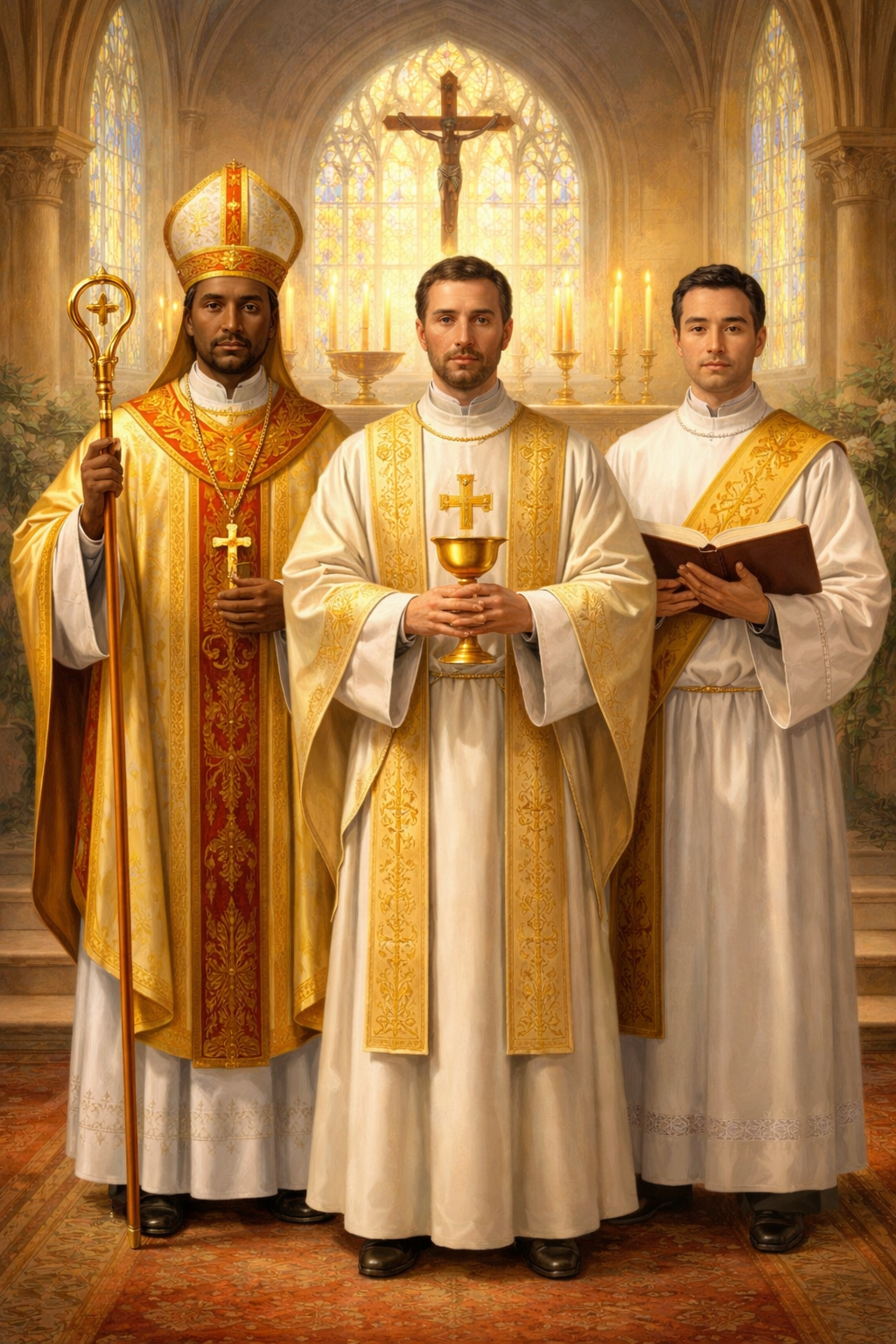
Holy Orders is one sacrament, but it is received in three degrees: bishop, priest, and deacon. Each degree shares in the Church’s mission in a distinct way.
Bishops
The bishop receives the fullness of the sacrament of Holy Orders. Bishops stand in apostolic succession, meaning their ministry is linked to the apostles through the laying on of hands across the centuries. They are entrusted with teaching, sanctifying, and governing the local Church. A bishop is not only an administrator. He is a visible sign of Christ the Shepherd in the diocese entrusted to him.
Because bishops possess the fullness of Holy Orders, they have a unique role in preserving the unity, faith, and sacramental life of the Church. They ordain deacons, priests, and other bishops, handing on the apostolic ministry entrusted by Christ.
Priests
Priests are co-workers with the bishop. They share in Christ’s priestly ministry in a way ordered toward the care of souls. They preach the Word, celebrate the Eucharist, hear confessions, anoint the sick, and accompany the faithful through the joys and sorrows of life. Most Catholics encounter ordained ministry most directly through the parish priest.
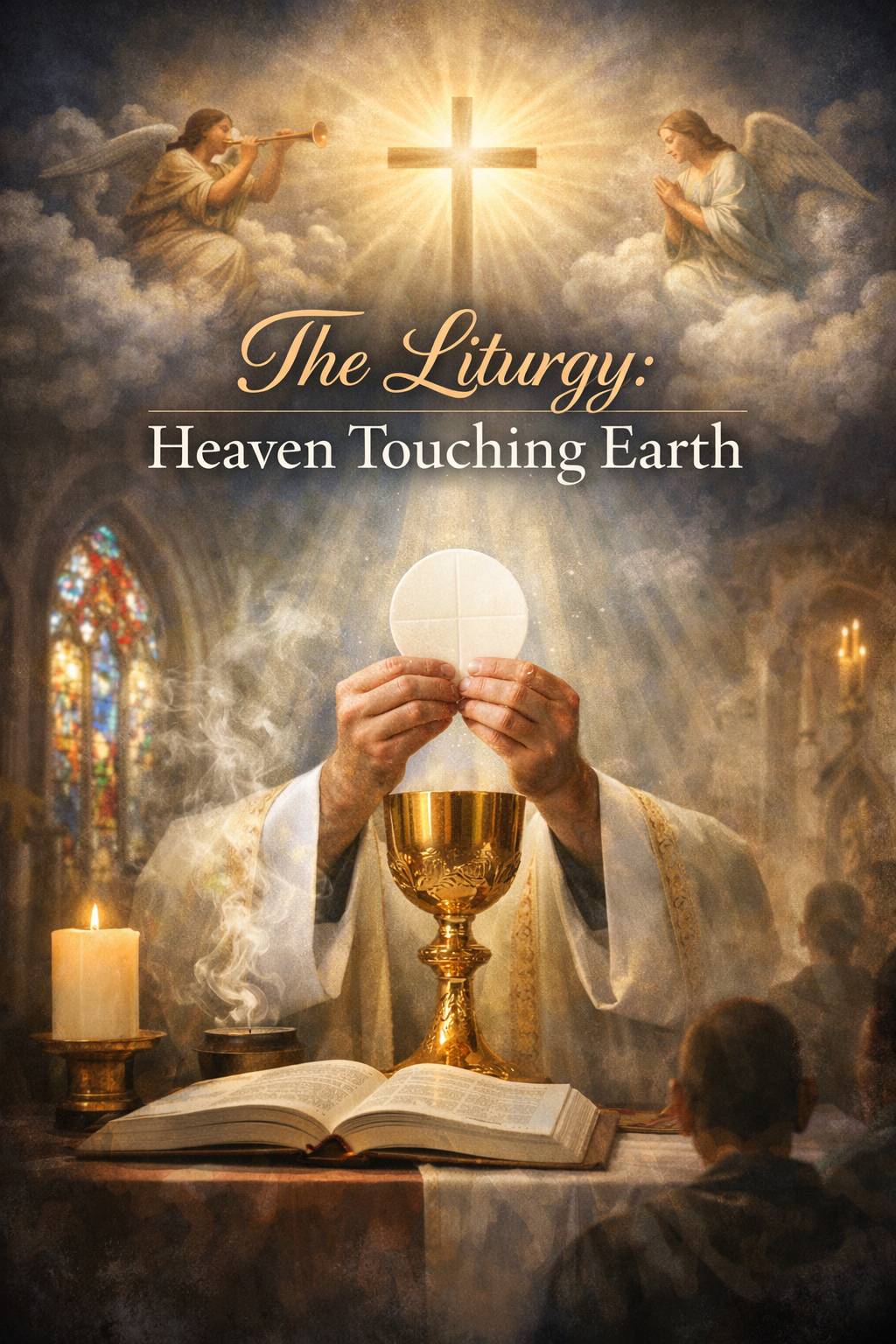
A priest’s life is deeply sacramental. He stands at the altar not in his own name, but in the person of Christ the Head. His ministry is meant to nourish the people of God, build up communion in the Church, and lead others more deeply into the life of grace.
Deacons
Deacons are ordained for ministry, but not for the priesthood. Their vocation highlights service in a visible and powerful way. They assist in the liturgy, proclaim the Gospel, may preach, witness marriages, baptize, and often serve in works of charity and pastoral care.
The diaconate reminds the Church that ministry is never about power for its own sake. It is about humble service. The deacon stands as a sacramental sign of Christ, who came not to be served, but to serve.
Holy Orders and the Priesthood of Christ
To understand Holy Orders rightly, we must begin with Jesus. He is the true and eternal High Priest. Every form of ordained ministry draws its meaning from Him. The bishop, priest, and deacon do not invent their mission. They receive it from Christ through the Church.
This keeps the sacrament grounded. Holy Orders is not about creating a spiritual elite. It is about Christ continuing His saving work through human instruments. When the Gospel is preached faithfully, when the sacraments are celebrated reverently, and when the people of God are shepherded with love, Christ is at work through the ministry He established.
The ordained minister is therefore called not only to perform duties, but to conform his life to Christ. The heart of priestly and diaconal ministry is not efficiency, visibility, or applause. It is self-giving love. The closer the ordained minister draws to Christ, the more fruitful his ministry becomes.
Who Can Receive Holy Orders?
The Church teaches that only a baptized man can validly receive sacred ordination. This is not presented as a statement about dignity or worth, but as fidelity to what the Church has received from Christ and the apostolic tradition. The Church understands herself as bound by the example of Christ, who chose men as the Twelve, and by the consistent practice of the Church through the ages.
A man is not ordained simply because he desires ministry or has recognizable talent. He must also be called by God and discerned by the Church. Vocation involves both personal response and ecclesial confirmation. The Church has the responsibility to test, form, and judge a candidate’s readiness for ordained ministry.
This matters because Holy Orders is not a private spiritual path. It is a sacrament for the life of the whole Church.
Who Can Confer Holy Orders?
Only a validly ordained bishop can confer the sacrament of Holy Orders. This is tied directly to apostolic succession. Through the laying on of hands and the prayer of ordination, the bishop passes on what he himself has received in continuity with the apostles.
This preserves both the sacramental integrity and the historical continuity of the Church’s ministry. Holy Orders is not self-appointed, and it is not conferred by a community vote alone. It comes through the sacramental life of the Church, which safeguards the ministry entrusted by Christ.
Ministry as Service, Not Status
One of the clearest lessons of Holy Orders is that authority in the Church must always be understood through the lens of service. Jesus washed His disciples’ feet. He taught that the greatest must become the servant of all. That truth is not peripheral to ordained ministry. It is at its center.
When Holy Orders are lived well, the faithful do not see a man drawing attention to himself. They see someone pointing them to Christ. They see a shepherd who teaches the truth, offers the sacraments faithfully, and lays down his life in love for the people entrusted to his care.
That kind of ministry is demanding. It requires sacrifice, fidelity, prayer, humility, and perseverance. But it is also beautiful. Through Holy Orders, Christ continues to care for His Church in every age.
Why Holy Orders Matters for the Whole Church
Even those not called to ordained ministry should care deeply about Holy Orders. The life of the Church depends upon the faithful transmission of the Gospel and the celebration of the sacraments. Without ordained ministry, the Church’s sacramental life would be deeply wounded. Holy Orders serves the whole people of God by ensuring that Christ’s flock is fed, guided, and sanctified.
At the same time, this sacrament should lead all the faithful to pray for bishops, priests, and deacons. It should also move the Church to pray for vocations. The need is not merely for more clergy in a numerical sense, but for holy ministers whose lives reflect the heart of Christ.
Final Reflection
Holy Orders reveals an essential aspect of how Christ loves His Church. He does not leave His people to fend for themselves. He continues to teach, sanctify, and shepherd them through the sacramental ministry of those ordained in His name. Bishops, priests, and deacons each serve in different ways, but all are meant to reflect the servant love of Jesus.
In the end, Holy Orders is not about rank. It is about mission. It is not about honor. It is about sacrifice. It is not about possession of power. It is about being configured to Christ, who came to pour Himself out for the life of the world.
References
- Catechism of the Catholic Church. (1997). In The sacrament of Holy Orders. Libreria Editrice Vaticana. https://www.vatican.va/content/catechism/en/part_two/section_two/chapter_three/article_6.html
- Second Vatican Council. (1964, November 21). Lumen gentium [Dogmatic constitution on the Church]. Vatican. https://www.vatican.va/archive/hist_councils/ii_vatican_council/documents/vat-ii_const_19641121_lumen-gentium_en.html
- Second Vatican Council. (1965, December 7). Presbyterorum ordinis [Decree on the ministry and life of priests]. Vatican. https://www.vatican.va/archive/hist_councils/ii_vatican_council/documents/vat-ii_decree_19651207_presbyterorum-ordinis_en.html