The Christian life is not lived in abstraction. God does not save us through ideas alone, but through real encounters. The Sacraments are the concrete, visible means by which Christ continues His saving work in the world.
They are outward signs instituted by Christ to give grace. Through ordinary elements—water, oil, bread, wine, spoken words—God communicates extraordinary life. The invisible becomes visible. Heaven touches earth.
The Sacraments are not merely reminders of grace. They truly give what they signify.
1. What Is a Sacrament?
A Sacrament is:
- A visible sign
- Instituted by Christ
- That gives invisible grace
Each Sacrament has both a visible element (matter and form) and a spiritual effect. The visible sign makes present a deeper spiritual reality.
For example:
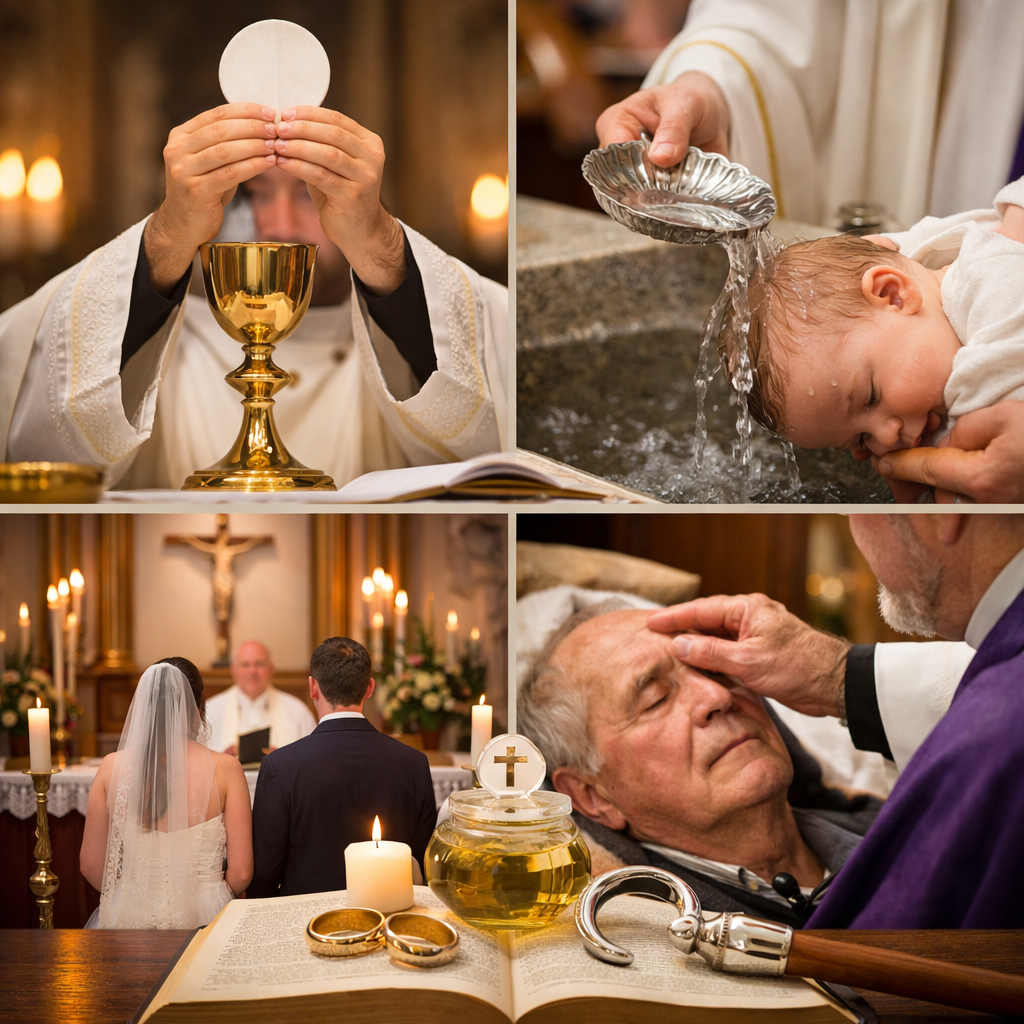
- Water cleanses in Baptism and removes sin.
- Bread and wine nourish in the Eucharist and become the Body and Blood of Christ.
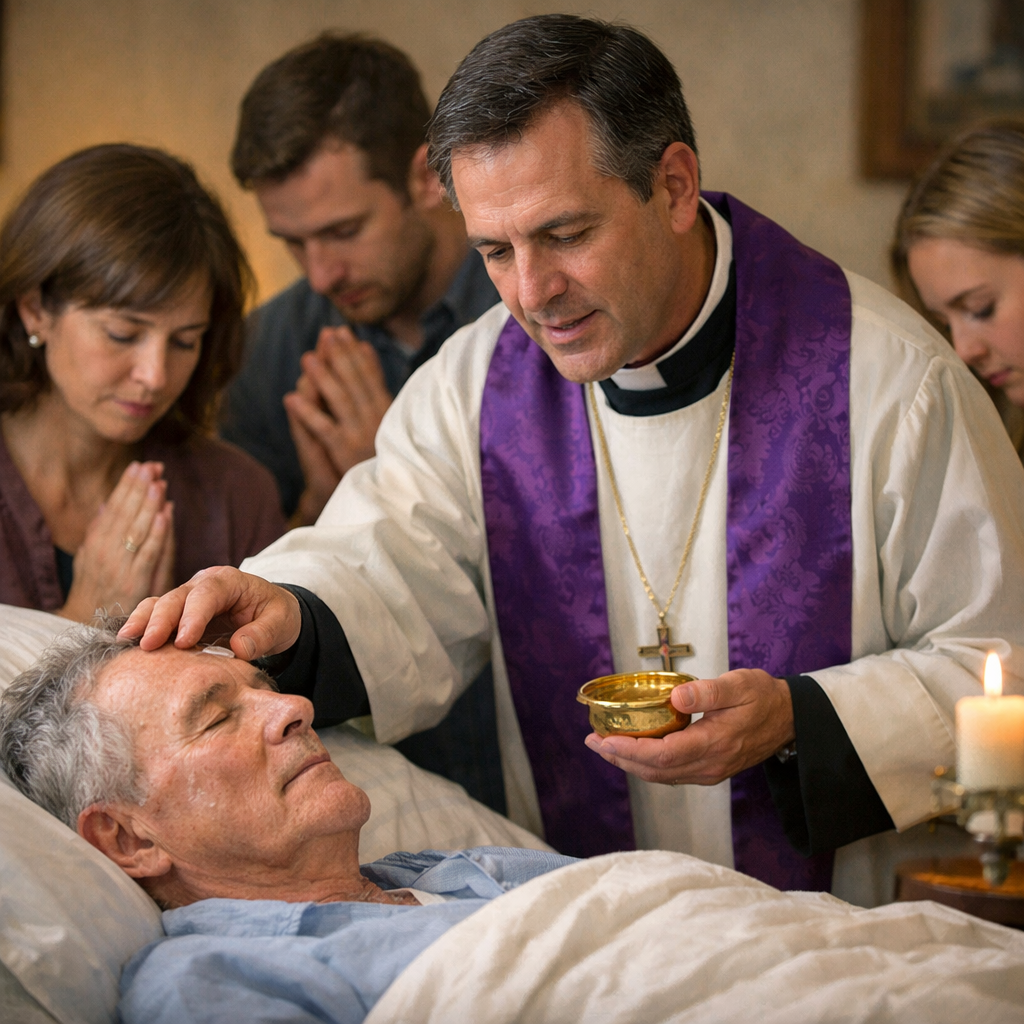
- Oil strengthens in Anointing and conveys healing grace.
God uses created things to communicate divine life. This reflects the logic of the Incarnation—just as the Word became flesh, grace now comes through tangible signs.
2. Christ at Work in the Sacraments
The Sacraments are actions of Christ Himself. Though celebrated by priests and bishops, it is Christ who baptizes, forgives, feeds, consecrates, and heals.
This is why the Church teaches that the Sacraments act ex opere operato—by the very fact of the action being performed. Their power does not depend on the holiness of the minister but on Christ’s promise.
Every Sacrament is Trinitarian:
- The Father is the source of grace.
- The Son has merited grace through His Paschal Mystery.
- The Holy Spirit applies grace to the soul.
The liturgy is therefore the work of the Trinity.
3. The Seven Sacraments
The Church celebrates seven Sacraments, grouped into three categories:
Sacraments of Initiation
- Baptism
- Confirmation
- Eucharist
These lay the foundation of Christian life.
Sacraments of Healing
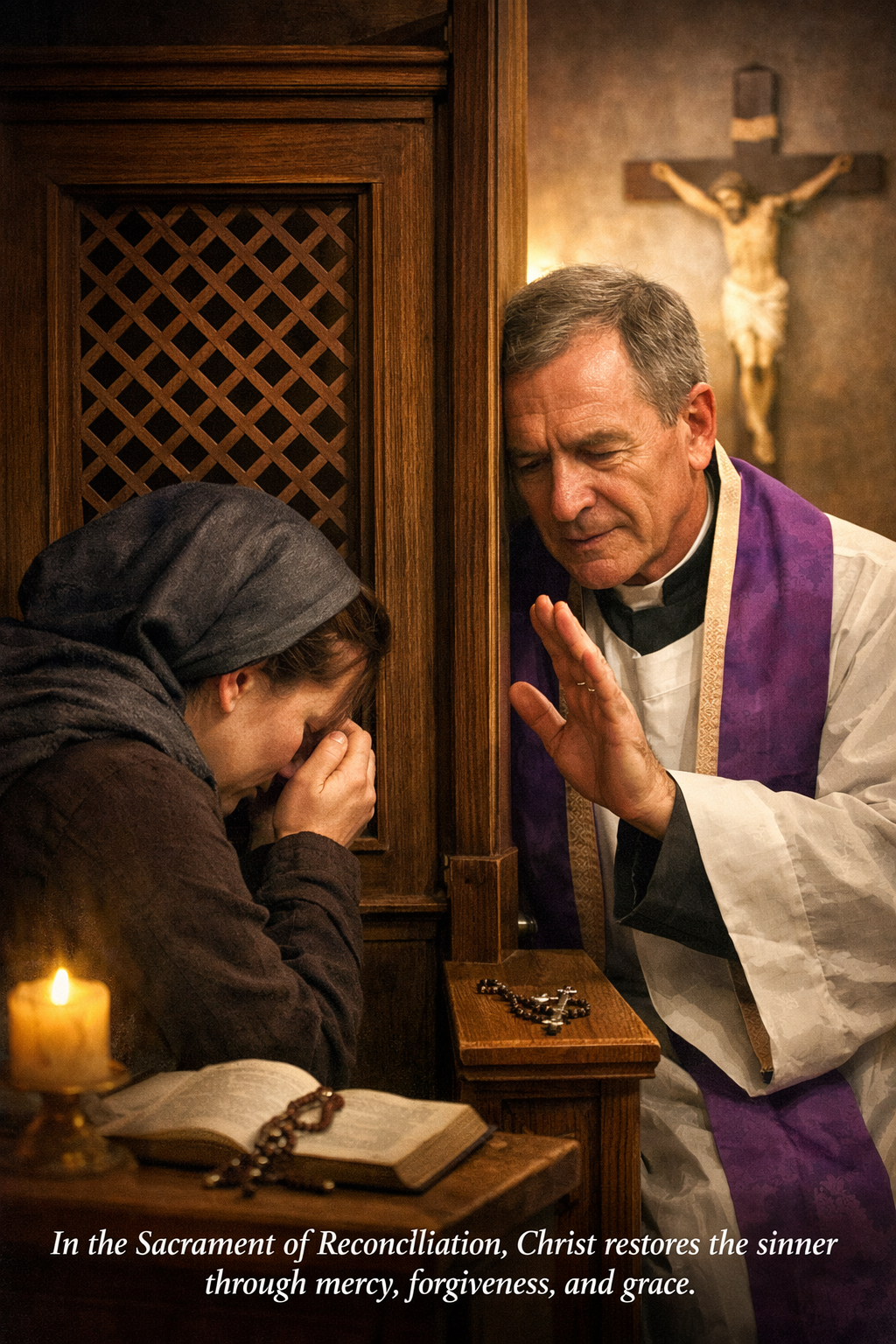
- Reconciliation
- Anointing of the Sick
These restore and strengthen when wounded by sin or suffering.
Sacraments at the Service of Communion
- Holy Orders
- Matrimony
These are directed toward the salvation of others and the building up of the Church.
Together, they accompany the believer from birth to death. They sanctify every stage of life.
4. Why Visible Signs?
Human beings are both body and soul. We learn through the senses. God meets us where we are.
Water, oil, laying on of hands, spoken words—these are not accidental. They are chosen instruments. Creation becomes a channel of redemption.
The Sacraments show that matter is not opposed to grace. Instead, grace elevates matter. The physical world becomes a vessel of divine life.
5. Grace: What Is Given?
Grace is participation in the life of God.
Through the Sacraments, we receive:
- Sanctifying grace (sharing in divine life)
- Forgiveness of sins
- Strength to resist temptation
- Spiritual healing
- A deeper union with Christ
- A permanent spiritual character (in Baptism, Confirmation, and Holy Orders)
Grace is not symbolic. It transforms the soul.
6. The Liturgical Life of the Church
The Sacraments are celebrated within the Church’s liturgy. The liturgical year—Advent, Christmas, Lent, Easter, Ordinary Time—unfolds the mysteries of Christ across time.
The Eucharist stands at the center. It is the source and summit of the Christian life. All the Sacraments are ordered toward communion with Christ.
Through the liturgy, the saving events of Christ are made present—not repeated, but sacramentally re-presented.
Conclusion
The Sacraments are divine encounters. They are not human inventions, nor are they optional rituals. They are the ordinary means by which God sanctifies His people.
Through visible signs, invisible grace is poured out. Through earthly elements, eternal life is given.
To receive the Sacraments is to enter into the living stream of grace flowing from the Heart of Christ.
Closing Prayer
Lord Jesus Christ,
You continue Your saving work through the Sacraments of Your Church.
Open our hearts to receive the grace You offer.
Strengthen our faith in the power of these holy signs.
Help us approach them with reverence, trust, and gratitude.
May Your grace transform our lives
And lead us into deeper communion with You.
Amen.