Scripture Readings: Jeremiah 3:14–17; Jeremiah 31:10, 11–12abcd, 13; Matthew 13:18–23
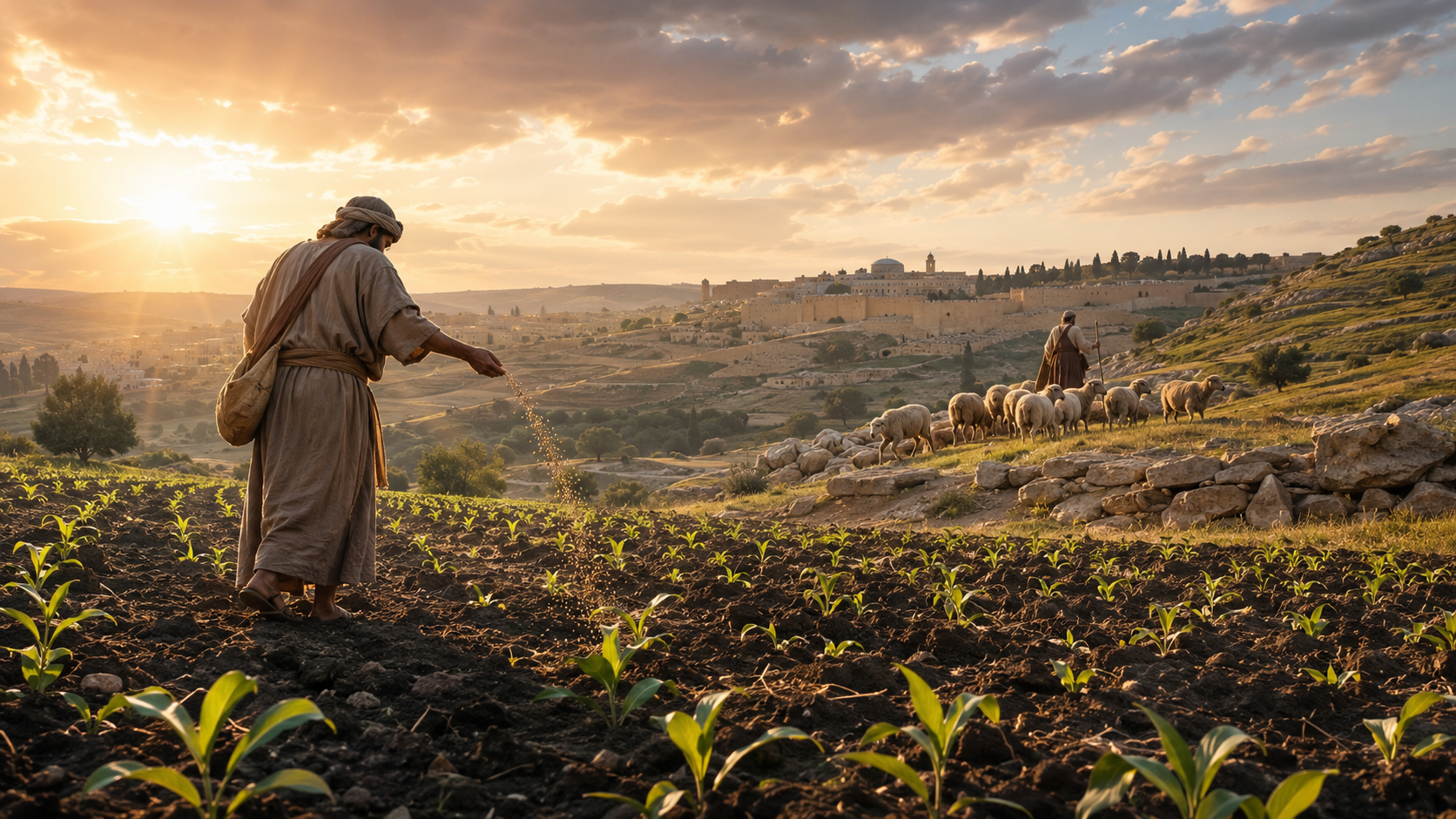
God continually calls His scattered children home and plants His Word within their hearts. Yet receiving the seed is only the beginning. Through prayer, perseverance, and freedom from worldly distractions, we become rich soil in which God’s Word can grow and bear abundant fruit.
God Is Calling Us Home
There are seasons when we become spiritually distracted, discouraged, or distant from God. Our prayer life may weaken. The pressures of work, family, finances, health, and daily responsibilities may begin to occupy nearly every part of our attention. Although we may not consciously decide to walk away from God, our hearts can slowly drift.
Today’s readings offer a message of restoration. God does not abandon His children when they wander. He calls them to return.
Through the prophet Jeremiah, the Lord says:
“Return, rebellious children, says the LORD, for I am your Master.”
This is more than a correction. It is an invitation from a loving God who desires to gather, guide, and restore His people. God recognizes their rebellion, but He does not define their future by it. He promises to bring them home and appoint shepherds who will lead them with wisdom and prudence.
The Lord makes the same invitation to us. No matter how distracted, spiritually dry, or distant we have become, God continues to call us back. His desire is not merely that we hear His voice, but that we receive His Word deeply enough for it to transform our lives.
The Word: What Kind of Soil Is in Our Hearts?
In the Gospel, Jesus explains the parable of the sower. The seed represents the Word of God, but the soil represents the different ways people receive it.
Some seed falls on the path, where it remains exposed and is quickly taken away. Other seed falls on rocky ground. It begins growing with promise but cannot develop strong roots. Some falls among thorns, where anxiety and the desire for riches eventually choke its growth. Finally, some seed falls on rich soil, producing a harvest far beyond what was originally planted.
The seed does not change. God’s Word is living, powerful, and filled with grace wherever it is proclaimed. The difference is found in the condition of the soil.
This gives us an important question for prayer: What condition is my heart in today?
At different moments, each of us may resemble all four types of soil.
We may be like the path when we hear Scripture without giving it our full attention. The Word reaches our ears but never enters our hearts.
We may be like rocky ground when we receive God’s promises enthusiastically but do not develop the spiritual roots needed to remain faithful during difficulty.
We may be like soil filled with thorns when worries, ambitions, possessions, and endless responsibilities crowd out our relationship with God.
We become rich soil when we hear God’s Word, seek to understand it, hold on to it, and allow it to influence our choices.
Reflection: Preparing the Soil Takes Perseverance
Rich soil does not develop by accident. It must be cultivated, cleared, nourished, and protected. The same is true of the human heart.
We cultivate good spiritual soil by making room for prayer, listening carefully to Scripture, participating in the sacramental life of the Church, and responding faithfully to what God reveals. We remove rocks by surrendering attitudes and habits that prevent our roots from growing. We pull away thorns by recognizing the worries and worldly desires that consume our attention.
This work requires perseverance.
The Alleluia verse reminds us:
“Blessed are they who have kept the word with a generous heart and yield a harvest through perseverance.”
A generous heart does more than receive God’s Word with temporary enthusiasm. It protects the Word when difficulties arise. It continues trusting when results are slow. It remains faithful when prayer feels dry and when obedience becomes costly.
Jesus does not promise that rich soil will avoid hardship. Instead, He teaches that a deeply rooted life can continue producing fruit despite hardship.
That fruit may appear as patience during a difficult season, kindness toward someone who has caused pain, courage when facing uncertainty, generosity toward someone in need, or faithfulness to prayer when God seems silent. These actions may appear small, but they reveal that God’s Word is alive and growing within us.
The Shepherd Who Gathers and Guards Us
The responsorial psalm gives us another reassuring image:
“The Lord will guard us as a shepherd guards his flock.”
God does not call us to cultivate our hearts without helping us. He is the Shepherd who gathers those who have been scattered, protects those who are vulnerable, and leads His people toward restoration.
Jeremiah promises that mourning will be turned into joy and sorrow into gladness. This does not mean that faith eliminates every difficulty. It means that sorrow does not have the final word for those who remain in God’s care.
Our Shepherd is able to gather the scattered areas of our lives. He can restore hope where discouragement has taken root. He can soften a heart hardened by disappointment. He can remove the thorns of anxiety and establish deeper spiritual roots.
Our responsibility is to return, listen, and remain open to His work.
Living the Message
God may be inviting us to examine what is competing with His Word in our lives.
Perhaps we need to slow down long enough to listen. Perhaps we need to return to daily prayer after a period of inconsistency. We may need to trust God through a challenge instead of abandoning what we once received with joy. We may also need to remove a distraction, unhealthy attachment, or persistent worry that is choking our spiritual growth.
The condition of our hearts is not permanent. Hard paths can be broken open. Rocks can be removed. Thorns can be cleared. Dry soil can be nourished.
Through grace, every heart can become rich soil.
The Lord is calling us home, but returning to Him is not simply about going back to where we once were. God calls us forward into a life that is more deeply rooted, spiritually mature, and fruitful.
Call to Action
Set aside ten quiet minutes today to reread Matthew 13:18–23. Ask God to show you which type of soil best describes your heart right now.
Identify one “rock” or “thorn” that may be preventing God’s Word from growing in your life. Choose one practical response—renewing daily prayer, limiting a distraction, releasing a worry, forgiving someone, or acting on something God has placed on your heart.
Write this prayer in a place where you will see it throughout the day:
“Lord, make my heart rich soil for Your Word.”
Prayer
Loving Father,
You call Your children to return and promise to gather us as a shepherd gathers his flock. Thank You for seeking us when we wander and for remaining faithful when our hearts become distracted.
Prepare my heart to receive Your Word today. Break through anything that has become hardened within me. Remove the rocks of shallow faith and the thorns of anxiety, selfish ambition, and worldly attachment.
Give me a generous heart that listens carefully, trusts deeply, and perseveres faithfully. Help Your Word take root in my thoughts, choices, relationships, and daily actions.
When difficulties come, strengthen my spiritual roots. When I become distracted, guide me back to You. May my life bear the fruit of love, patience, mercy, courage, generosity, and faithful service.
Guard me as a shepherd guards his flock, and use the fruit of my life to bring hope and encouragement to others.
Through Christ our Lord.
Amen.