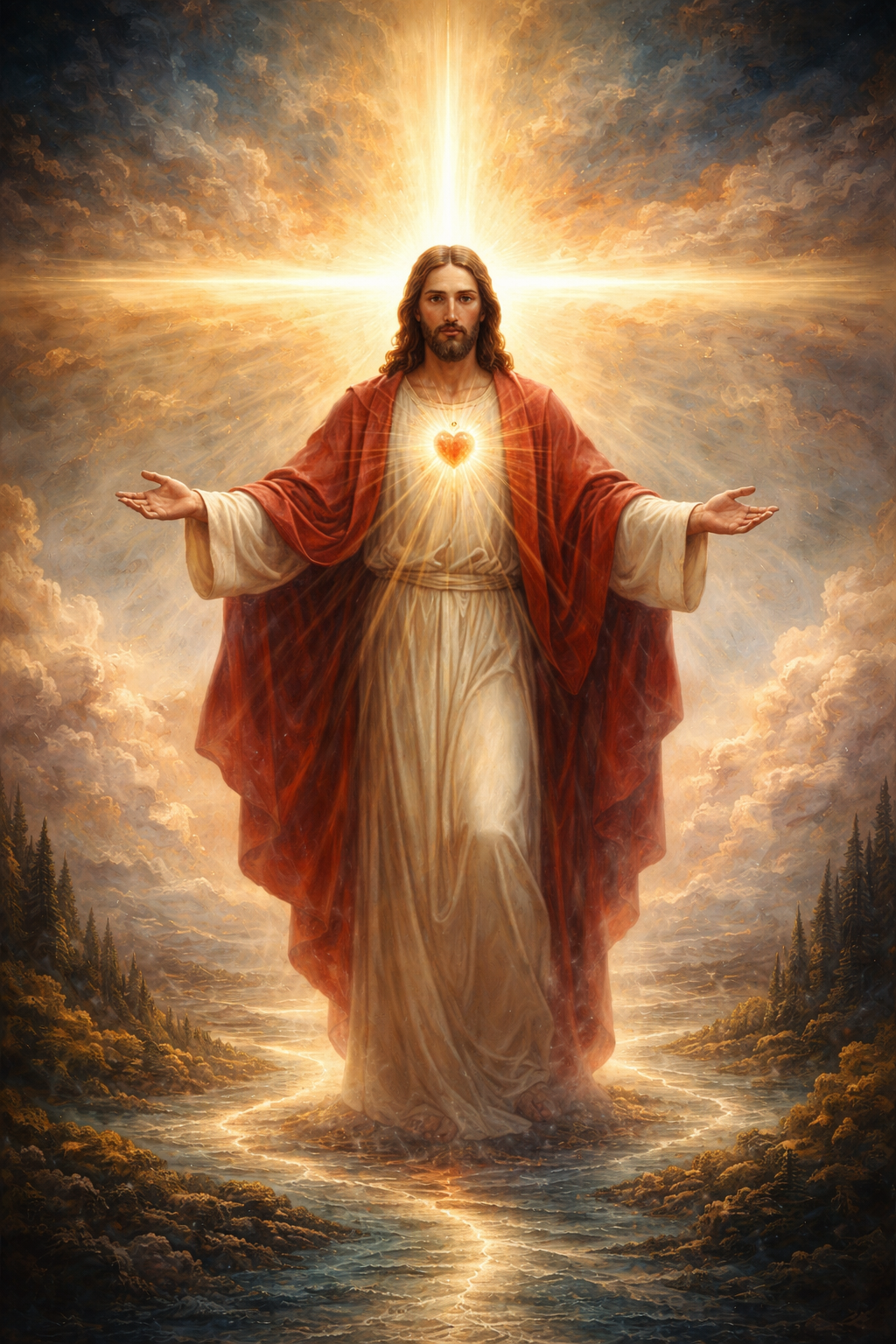
At the heart of the Christian faith stands not an idea, a philosophy, or a moral code, but a Person: Jesus Christ. Everything the Church believes flows from who He is and what He has done. In proclaiming Jesus Christ as Mediator and Redeemer, the Church confesses that God has definitively entered human history to restore communion with humanity through His Son.
The Meaning of the Name “Jesus”
The name Jesus means “God saves.” It reveals both His mission and His identity. He is not merely a teacher pointing the way to salvation—He is salvation. From the moment of the Incarnation, God acts personally to rescue humanity from sin and death.
Jesus is not one savior among many; He is the one Mediator between God and humanity. As Saint Paul writes, “There is one mediator between God and men, the man Christ Jesus” (1 Timothy 2:5). In Him, the infinite God and finite humanity are united without confusion or division.
Christ: The Anointed One
The title “Christ” means Anointed One. Jesus fulfills the Old Testament hopes of Israel by uniting in Himself the three great anointed offices:
- Priest – offering the perfect sacrifice of Himself to the Father
- Prophet – revealing fully the truth about God and man
- King – reigning not by domination, but by love and self-gift
These roles converge on the Cross, where Jesus reveals the true nature of divine power: self-emptying love.
True God and True Man
Central to the Church’s faith is the mystery that Jesus Christ is fully God and fully man. He is not half-divine or merely inspired by God. Nor is His humanity an appearance or illusion. He possesses a true human body, soul, intellect, and will—while remaining eternally divine.
This mystery matters deeply for salvation. If Jesus were not truly God, He could not save. If He were not truly man, humanity would not be healed. As the Church teaches, “What is not assumed is not redeemed.” By taking on our humanity, Christ restores it from within.
Why the Word Became Flesh
The Incarnation answers one of the most profound questions of faith: Why did God become man?
The Church teaches several inseparable reasons:
- To save us by reconciling humanity with God
- To reveal God’s love in a way we can see and touch
- To be our model of holiness, showing us how to live
- To make us partakers in divine life, adopted children of the Father
In Jesus, God does not remain distant. He enters our suffering, our weakness, and even our death—so that nothing human is foreign to Him except sin.
The Redeemer Who Draws Near
Jesus Christ is not only the Redeemer in a historical sense; He remains present and active in the life of the Church today. Through the sacraments, Scripture, and prayer, He continues His saving work, inviting every person into a living relationship with Him.
To believe in Jesus Christ, then, is not merely to accept a doctrine. It is to entrust one’s life to Him—to say with the Church, “I believe in Jesus Christ, His only Son, our Lord.”
In the next post, we will turn to the heart of Christ’s saving work: the Paschal Mystery—His Passion, Death, and Resurrection, through which redemption is fully accomplished.
Prayer: Jesus Christ, Mediator and Redeemer
Lord Jesus Christ,
Only Son of the Father and Savior of the world,
we praise You for becoming flesh
and dwelling among us in love and humility.
You are the Mediator who bridges heaven and earth,
true God and true Man,
who entered our broken history
to heal what was wounded by sin.
Through Your obedience, You restored our hope;
through Your Cross, You revealed the depth of the Father’s mercy.
Redeemer of our lives,
draw us ever closer to Your Sacred Heart.
Teach us to trust in Your saving grace,
to follow You with faithful hearts,
and to live as children of the light You bring into the world.
May Your Spirit strengthen us
to carry Your love into our homes, our work, and our communities.
Help us to proclaim with our lives
that You alone are Lord,
to the glory of God the Father.
We ask this in Your holy Name,
Jesus Christ, our Mediator and Redeemer.
Amen.